War Against Waste – Monks of Method

The War Against Waste

Waste is not a byproduct of the textile industry. It is a core feature of its business model.

Overproduction

The fashion industry works by bulk ordering next season's clothes months in advance and driving down the cost of production. Demand forecasting is done well ahead of time to enable this. This results in a good percentage of clothes going unsold even after repeated discount sales. And a large percentage of orders are returned by customers due to fit and sizing issues. All these result in a large share of the clothes produced ending up in landfills instead of your wardrobe.

Statistics vary greatly, but here are some we found that should give you a sense of the problem:

* One garbage truck of textiles goes into landfills or is burnt every second.

* On average, 20–40% of online orders are returned. Apparel accounts for close to 80% of all e-commerce returns.

* Fashion consumes more than 200 trillion litres of water yearly.

* Shipping returns alone generates about 15 million metric tonnes of CO2 yearly, the equivalent of 3 million cars.

Blended Fabrics

Synthetic fabrics and the elastane stretch added to your clothes raise a different set of concerns. Less than 1% of discarded clothes get recycled, as elastane clogs the machinery and mixed fibres cannot be respun. So the impact of recycling programs is limited due to such blended fabrics.

On top of it, about 35% of microplastic pollution is estimated to come from synthetic fabrics.

Use and Throw

The fashion treadmill runs on impulse buying. Brands make the latest fashion available at a click, on social media and other channels. Algorithms nudge you toward instant gratification. Studies say that consumption rose by 60% in recent times, but the active use of a garment has come down by half. Here's another way to think about it, as per reports: carbon, water, and waste footprints drop by 20–30% if people actively use their garments for nine extra months.

The Method of the Monks

Make Only What You Ask for

We make only what is ordered. Every piece is made for a specific individual, with their own customisations and measurements. This allows us to know you better and serve you better by crafting the perfect-fitting garment. And you get honest pricing from us, as we do not need to mark up prices to account for waste and discount sales. Returns come down to low single digits.

Think about the downstream impact too. Energy and water consumption, shipping costs, and associated pollution all come down as only what you are likely to wear is shipped.

Natural & Organic Fabrics

We use natural fibres. Mainly cotton and linen. There is no elastane or stretch. Very rarely will you find blended fabrics in our offerings. And in such cases, they will be natural fibres. In fact, most of our clothes are made with organic cotton.

Overengineer to Endure

Raw Indigo Raw Indigo

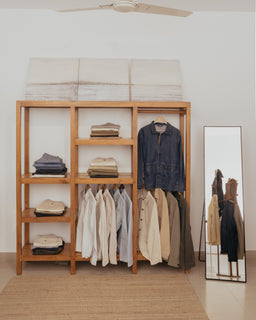
Classic styles that transcend trends. Rock-solid construction. Great fit. Lifetime repair and refurbishing services to extend your clothe’s life. We design and overengineer everything so your clothes last. Let less be more.

Living Wages & Ethical Manufacturing

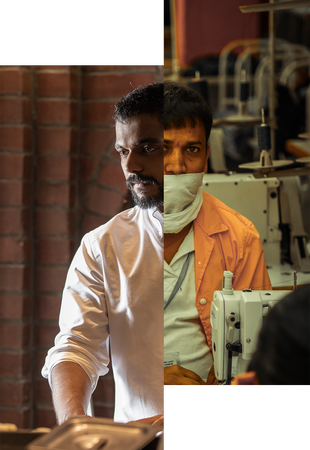
A living wage is the minimum each worker needs to afford a decent standard of living for a family of four. The fashion industry, in its drive for cost control, often pushes worker wages well below a living wage. Because we don't overproduce or rely on discount sales, we don't need to claw that margin back from wages. We are in a position to ensure more than living wages for everyone in our value chain.

Zero Liquid Discharge & Sustainability

We look at waste holistically. Your clothes are manufactured at our partner Dibella's Zero Liquid Discharge facility. Advanced wastewater treatment results in the recycling of purified water, and any remaining liquid waste is converted into dry solid residue. And there is more. Our entire process from design to delivery and post-use is aimed at eliminating wastage at every stage.

Read more

Fit for Body & Soul

Fit for Body & Soul

Custom Clothing for the Modern Man

Learn how we do it ->